 THE IPPEKI GROUP
IRI
Ippeki Research Institute
Research in the world
Afghanistan Beyond the Fog of War – Persistent Failure of a Rentier State
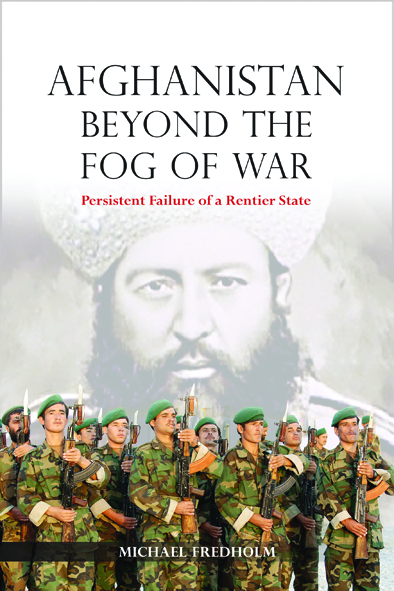
This is the first book to scrutinize the root causes of problems today with Afghan reconstruction. It begins in 1880 with the coming to power of Emir Abdur Rahman and departure of an occupying British army. On the northern border, Russian forces were also poised. Determined to preserve Afghan independence, Abdur Rahman devised a nation-building project grounded on centralized, autocratic rule and based on security, modernization and economic reform.
Though continued by his successors, this project ultimately failed. A key reason for this was that, even as Abdur Rahman implemented policies that might be understood as ‘Western’ and ‘rational’, the great powers of the day took their cue from traditional institutional relationships in Afghanistan; local patronage relations were extended to the international level. In the process, Afghanistan became a rentier state, Abdur Rahman’s model abandoned in favor of foreign subsidies increasingly diverted from security and economic development. Successive foreign powers, especially the Soviet Union and United States, have upheld this centralized, rentier model of governance and development despite it consistently failing over the years.
This work explores dynamics seldom covered in other studies of Afghanistan, including conflict between state-imposed pashtunization and multiple local/ethnic identities, likewise contradictions between the clericalism and secularism deployed in the nation-building process. It explores the largely overlooked ebb and flow of institutional development in Afghanistan, at all levels, in the context of international interest in the country, with special attention to Soviet and US/Coalition strategies and their effects. It also focuses on the power of patronage relations in establishing and retaining control in Afghanistan, and how the extension of such relations to the international level transformed Afghanistan into a rentier state that struggles to unite its people.
Described by one Afghanistan expert as an excellent piece of work, very well documented with close attention to detail, this study offers sober analysis and critical insights. It will interest scholars and students of Afghan affairs plus policy-makers, diplomats, soldiers, international organizations and NGOs, businesses, journalists and many others engaged with Afghanistan and issues of political, military and economic power, democratization and civil–military relations in the region.
Transnational Organized Crime and Jihadist Terrorism: Russian-Speaking Networks in Western Europe
This book describes and analyzes the convergence of transnational organized crime and jihadist terrorism that has taken place within Russian-speaking social networks in Western Europe.
Studies have shown that while under certain circumstances links between criminal organizations and terrorist groups appear, these are usually opportunistic and temporary in nature. Only rarely do they develop into something deeper and transformative, a convergence between crime and terrorism. This book reveals that Russian-speaking transnational organized crime and jihadist terrorism pose a serious threat to security and constitute a major challenge for law enforcement. Through their links with transnational organized crime, Russian-speaking jihadist networks from the Caucasus and Central Asia have easier access to weaponry, commercial explosives, and forged IDs than many other jihadist networks. Being in effect an integral component of transnational organized crime, the Russian-speaking jihadists can be assessed as potentially more capable than many other jihadists. The book assesses the effects of terrorism and organized crime on Russian-speaking diasporas in Western Europe and examines the implications for counterterrorism as well as policing on how to counteract the illegal activities of these networks. Drawing on Swedish court cases the work shows that an additional, and sometimes more effective way, to fight terrorism is by focusing on the non-terrorist types of crime perpetrated by terrorists.
This book will be of much interest to students of terrorism and counter-terrorism, political violence, criminology, security studies and IR in general.
Understanding Lone Actor Terrorism
This volume examines the lone actor terrorist phenomenon, including the larger societal trends which may or may not have led to their acts of terrorism.
With lone actor terrorism becoming an increasingly common threat, the contributors to this volume aim to answer the following questions: What drives the actions of individuals who become lone actor terrorists? Are ideological and cultural issues key factors, or are personal psychological motives more useful in assessing the threat? Do lone actors evolve in a broader social context or are they primarily fixated loners? What response strategies are available to security services and law enforcement? What is the future outlook for this particular terrorist threat? Although these issues are frequently discussed, few books have taken a global perspective as their primary focus. While many books focus on lone actor terrorists in relation to terrorist groups, such as Al-Qaida and the Islamic State, few, if any, cover lone actors of all ideological backgrounds, including the variants of active shooters and malicious insiders in information security, such as Edward Snowden – with both of these latter categories constituting an important variant of lone actors. Utilising the expertise of academics and practitioners, the volume offers a valuable multidisciplinary perspective.
This book will be of much interest to students of terrorism and counter-terrorism, political violence, criminology, security studies and IR.
The Shanghai Cooperation Organization and Eurasian Geopolitics
- First study to properly treat a key regional grouping in Asia.
- Explores both security and energy issues across the region.
- Considers geopolitical obstacles to the SCO’s long-term viability.
The Shanghai Cooperation Organization (SCO) has developed into a key regional security group in Asia, its member states representing no less than “half of humanity”.
Alarmists believe that the SCO is making itself into a NATO of the East, thus posing a long-term threat to the West. Moreover, several members are key players in economic development and energy production, hence political developments within the SCO can no longer be ignored by the global market. Even so, the organization has long been disregarded by political leaders in the West and is seldom reported in Western media or analysed in academic works. As such, this ground-breaking volume with contributors from across the region and beyond will be a key reference for many specialists and academics working on Asian affairs.